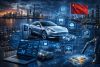
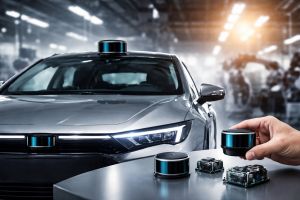
For years, LiDAR was something you only saw on prototype self-driving vehicles. The bulky spinning sensors mounted on top of early robotaxis weren’t just noticeable—they were incredibly expensive. A single unit could cost around $50,000, which made the technology useful for research but unrealistic for mass-produced cars.
That situation has changed quickly.
Advances in manufacturing—driven largely by Chinese suppliers and automakers—have pushed prices down dramatically. Some compact LiDAR units now cost only a few hundred dollars, opening the door for broader adoption in consumer vehicles.
How China Drove the Price Down
A big part of the shift happened in China’s fast-growing electric vehicle market. Automakers there began installing LiDAR sensors in production EVs and pressured suppliers to produce them at scale.
Companies like Hesai and RoboSense responded by ramping up manufacturing. As production volumes increased, costs dropped sharply. What was once a niche, experimental sensor has become a relatively affordable component.
Today, millions of LiDAR units are produced each year. Many Chinese EVs already include the technology as part of their advanced driver-assistance systems, using it to improve features such as highway driving assistance and automated parking.
Why Western Automakers Are Taking Notice
At the same time LiDAR has become cheaper, vehicles themselves have gained far more computing power. That combination has made the technology much more practical for mainstream use.
LiDAR—short for “light detection and ranging”—works by sending out laser pulses and measuring how they bounce back. The system builds a highly detailed three-dimensional map of the surrounding environment.
Unlike cameras, which depend heavily on lighting and contrast, LiDAR can function reliably in darkness, glare, or poor weather conditions. It also provides very precise distance measurements, which is valuable for automated driving systems.
Because of these advantages, several automakers now see LiDAR as a useful complement to cameras and radar rather than a replacement for them.
Rivian plans to include LiDAR on its upcoming R2 crossover. Ford and General Motors are working on systems that could support Level 3 automated driving later this decade. Lucid already integrates LiDAR into its driver-assistance package.
Not Everyone Is Convinced
Despite the momentum, the technology still has skeptics.
Tesla, led by Elon Musk, has taken a different approach. The company relies primarily on cameras and artificial intelligence for its driver-assistance system. Musk has repeatedly argued that LiDAR adds unnecessary complexity and cost, and that a camera-based system can achieve full autonomy.
Recent developments show that the path to fully autonomous driving remains uncertain. Tesla has acknowledged that some vehicles may need hardware upgrades before they can support future unsupervised self-driving capabilities—something that has raised questions among customers who already purchased the company’s Full Self-Driving package.
The Industry Is Still Deciding
For now, the automotive industry is split between two strategies. Some companies believe camera-based systems will eventually be enough. Others see LiDAR as a critical extra layer of perception that improves safety and reliability.
What’s clear is that falling prices have changed the conversation. A sensor that once cost tens of thousands of dollars is now affordable enough to appear in everyday vehicles—making it far more likely that the next generation of cars will rely on it.